
Gibson County Probate Coverage
Gibson County probate material is not routed to a separately named probate court. The research map resolves the probate office as the probate jurisdiction of the Circuit/Superior trial courts. In practical terms, estate and guardianship papers move through the trial court and the Gibson County Clerk of the Circuit Court. The clerk's official duties include issuing letters testamentary, letters of administration, and letters of guardianship. The clerk also records wills, final accounts, and reports of distribution in probate proceedings.
That local structure affects how records are found. The docket may be searchable as a court case, but the record custodian for copies is the clerk. The Clerk-Courts page also says staff cannot give legal advice and that the office does not carry most forms for probate, adoption, and guardianship. Most individuals typically need an attorney for those matters. The office can file, preserve, and copy records, but it cannot choose forms, draft pleadings, explain legal strategy, or tell a filer what to put in a petition.
The Gibson County Clerk Google Play app listing is one official source showing the clerk's local communication channel.
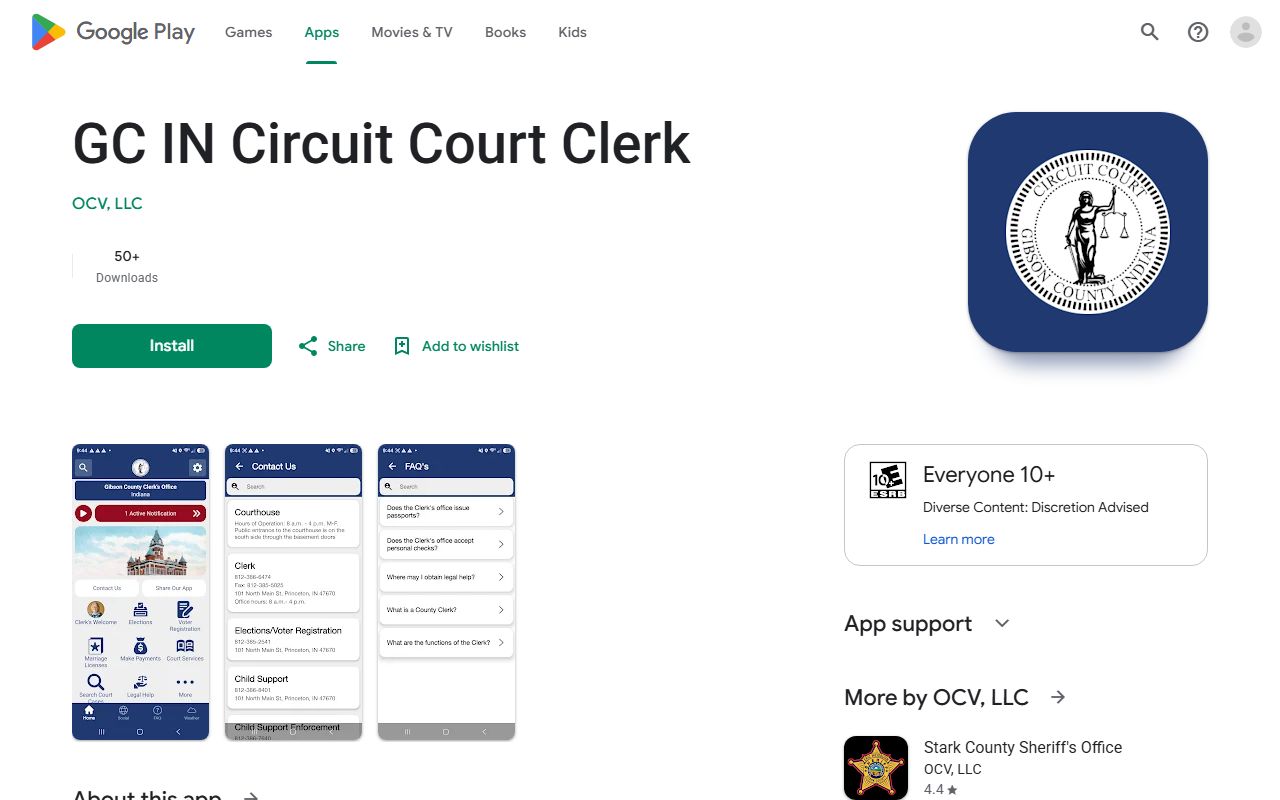
The app listing supports the clerk's public contact role, but the research did not confirm a probate-only app search feature.
Probate Terms Defined
Probate files use short legal terms that can be confusing when reading a docket or copy request result. These definitions match the way Gibson County probate records are described in the research file and in common estate practice. They are plain-language meanings, not legal advice about a specific estate.
- Testator
- The person who made a will.
- Executor
- The person named to carry out a will after appointment by the court.
- Intestate
- A death without a valid will controlling the estate.
- Guardianship
- A court case asking for authority over a protected person's care, property, or both.
- Conservatorship
- A protective arrangement focused on property or financial management; Indiana sources may use guardianship terms in many local records.
Search Gibson County Probate Records
Start with the public docket when the probate matter may be in the statewide case system. Indiana MyCase can show probate-related case numbers, parties, filing dates, case events, and hearings when a public probate docket is available. The docket is not the same as the full estate file. Wills, letters, inventories, accountings, and final distributions may need a clerk copy request, and confidential material may be withheld or redacted under Indiana court access rules.
- Search Indiana MyCase by party name, case number, or county if the estate or guardianship case number is not known.
- Record the court, cause number, caption, filing date, and any public docket entries that identify the needed document.
- Contact the Gibson County Clerk at (812) 386-6474 or visit the courthouse for documents that are not available online.
- Ask whether the requested item can be copied, whether certification is available, and what fee and delivery method apply.
- For active estate, guardianship, adoption, or complex probate filings, consult counsel when the question is about what to file next.
Indiana court public-records guidance says that when a document is not available online, the person should contact the clerk in the county where the case is being heard. That is the key fallback for Gibson County probate records that are sealed, older, paper-based, or not scanned into the public portal.
Gibson County Probate Contacts
Probate contact information should use the trial court and clerk path because Gibson County does not publish a separate probate court office. The clerk is the central record custodian for probate filings and copies. The Circuit Court page provides the judge and court office phone for Circuit Court, while the clerk contact page provides the public counter, email, fax, and hours for filings and records.
Gibson County Clerk of the Circuit Court
Clerk: Sherri Smith, CPM
101 N Main St.
Princeton, IN 47670
(812) 386-6474
clerk@gibsoncounty-in.gov
8 a.m.-4 p.m. Monday-Friday
Gibson Circuit Court
Court House, 101 N Main St.
Princeton, IN 47670
(812) 385-4885
Fax: (812) 385-3089
Probate Filing Fees
The research file did not locate a full official Gibson County probate-fee schedule or small-estate threshold table. Because probate fees can depend on filing type, service, certification, and state court cost rules, the safest local instruction is to confirm the fee with the clerk before filing or mailing a request. Do not assume that marriage, divorce, or small-claims fees apply to an estate case.
| Probate Item | Amount or Local Rule |
|---|---|
| Estate or probate filing | Confirm with Gibson County Clerk before filing |
| Letters testamentary | Issued by clerk/court when authorized; fee not located in research |
| Letters of administration | Issued by clerk/court when authorized; fee not located in research |
| Letters of guardianship | Issued by clerk/court when authorized; fee not located in research |
| Certified probate copy | Confirm current copy and certification cost with clerk |
Note: The lack of a published probate-fee table in the research is a reason to verify, not a reason to reuse unrelated fees.
Attorney Help for Probate
The Gibson County Clerk-Courts page states that the office does not carry forms for most case types and that most people typically need an attorney for probate, adoption, and guardianship. That statement should be read as a practical filing warning. The clerk can receive filings, preserve records, issue authorized letters, and explain copy procedures, but staff cannot decide whether an estate must be opened, which petition to file, or how notice should be served.
Estate users should gather the death information, known will, asset details, possible heirs, creditor information, and any prior Gibson County court case number before contacting counsel or the clerk. Guardianship users should identify whether the request concerns a minor, an adult, personal care, property, or both. Those facts help determine whether the record may be public, partly restricted, or handled with confidential forms.
What Probate Records Show
A Gibson County probate file may show the estate case number, decedent or protected person, petitioner, representative, letters, will, inventory, accounting, report of distribution, and trust money held with the clerk. Some entries may appear as docket events, while actual documents may require a copy request. A will may be part of the file if admitted and public. Inventories and accountings can include estate property or money details, which may be subject to court rules and redaction.
Read each probate docket entry by matching the court action to the authority being requested. A petition may open the case, but letters show whether the court has authorized a representative to act. A final account or report of distribution points toward closing activity. If only the docket line is visible online, the clerk can explain how to request the document that supports that entry.
| Field or Document | What It Shows |
|---|---|
| Estate or guardianship case number | Court cause number for the probate matter. |
| Decedent or protected person | Name of the estate subject, ward, or minor. |
| Petitioner or personal representative | Person seeking appointment or authority. |
| Letters testamentary | Executor authority issued by the clerk or court. |
| Letters of administration | Administrator authority where no valid executor appointment controls. |
| Letters of guardianship | Guardian authority for person, property, or both. |
| Will | Testamentary document if filed, admitted, and public. |
| Final account or report of distribution | Closing documents for estate administration and distribution. |
Restricted Probate Records
Not every probate-related record is public in full. Guardianship, adoption, mental-health, and minor-related material may be confidential or partly redacted. Indiana access rules also protect certain personal identifiers and sealed records. A public docket entry may exist even when the underlying document is unavailable online. The clerk can identify the local copy process, but a judge's order or state access rule may control whether a document can be released.
Probate records also overlap with other court-record limits. Adoption grants are sent by the clerk to the State Board of Health, but adoption case files are restricted. Guardianship files may involve protected persons, minors, medical information, or financial account details. If MyCase shows a limited docket or no document link, use the clerk request path and expect staff to screen the request under Indiana access rules before release.
Federal court is separate from Gibson County probate, but federal jurisdiction can matter for bankruptcy, federal claims, or litigation tied to estate assets. The U.S. District Court for the Southern District of Indiana is the federal district source for the region.
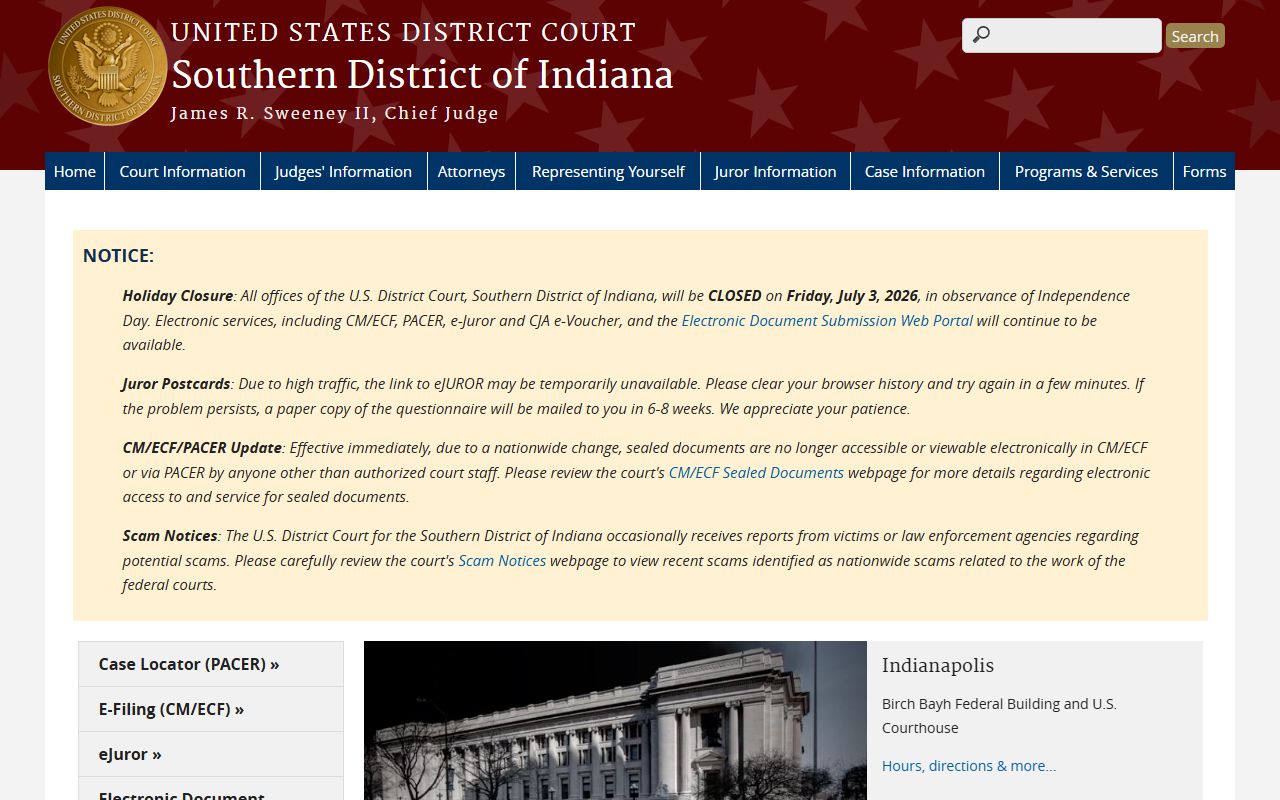
The federal court source is not a substitute for Gibson County probate records, but it helps separate county estate files from federal matters.
The nearest federal courthouse information appears on the Evansville federal courthouse page.
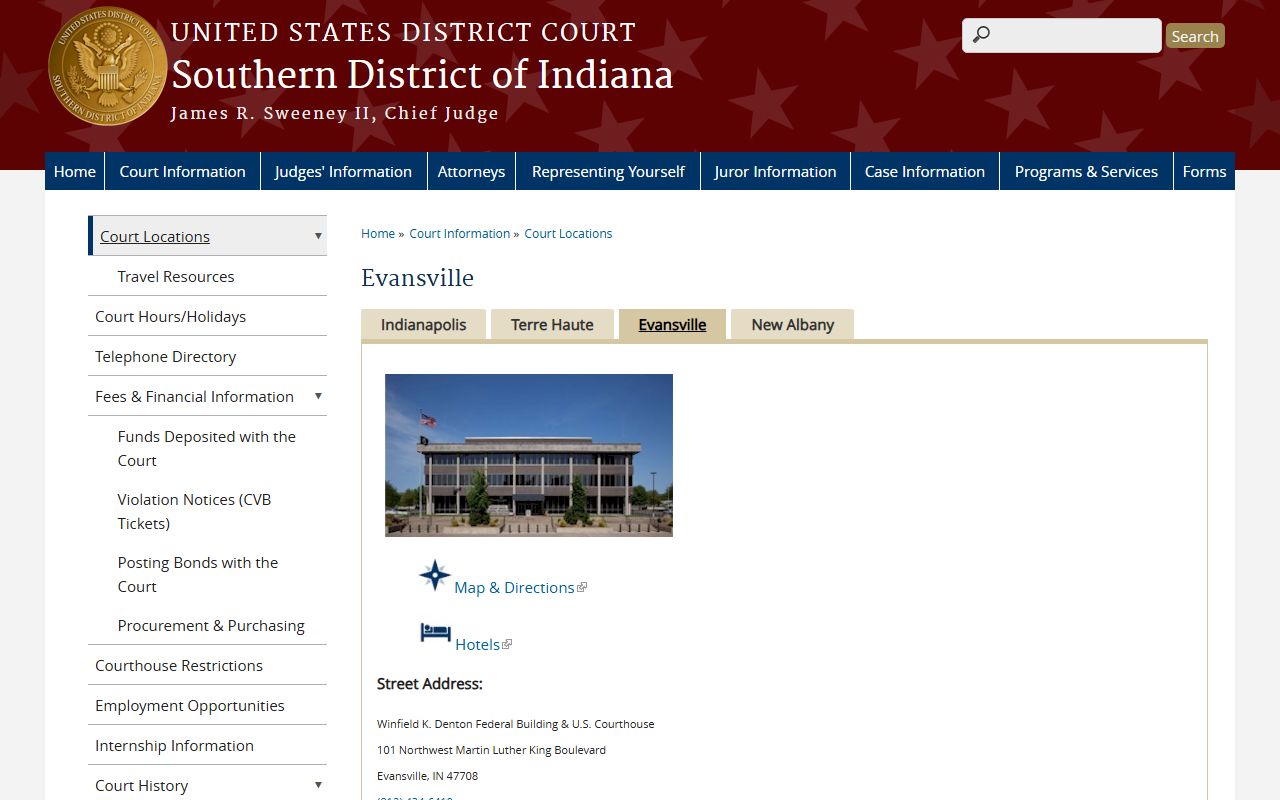
That courthouse reference belongs only to federal filings. Estate, will, letters, and guardianship records for Gibson County remain local trial court and clerk records unless a separate federal case exists.