
Gibson County Criminal Case Files
A criminal court record begins when a criminal case is filed in court. In Gibson County, that case file is kept through the local trial court and Clerk of the Circuit Court structure. It may include the charging information, probable-cause material when public, appearances, bond orders, discovery notices, motions, hearing entries, pleas, trial settings, verdict or plea outcome, sentencing order, probation terms, restitution, and dismissal or conviction disposition.
Gibson Superior Court handles a specific criminal division. The county page lists arson, theft, home improvement fraud, drug cases, alcohol cases, and offenses against public health, order, and decency among its criminal work. Gibson Circuit Court also sits as a county trial court. The local rules research says misdemeanor and felony cases are filed in the courts of record in Gibson County under an allocation approach. The court file is broader than a charge list, and the outcome belongs in the criminal court record.
Search Gibson County Criminal Records
Criminal case lookup starts with Indiana MyCase. Search by defendant name or cause number, then filter by Gibson County and court if the portal offers those options. A name search may return civil, traffic, or other cases as well, so the case type and court name matter. Open the case summary and read the docket events in date order. For the charges themselves, use the charging entry and charge table. For the full case outcome, read the disposition and sentencing entries.
- Search MyCase by cause number when it is known, or by defendant name when it is not.
- Filter for Gibson County, Gibson Circuit Court, or Gibson Superior Court where the portal permits.
- Open the criminal case result and review charges, docket entries, hearings, and public document links.
- Check for disposition, sentence, probation, restitution, dismissal, or expungement activity before describing the outcome.
- Contact the Clerk of the Circuit Court for certified copies or public documents that are not displayed online.
A closer look at filed charge labels belongs on the Gibson County arrest records and charges page, while this page follows the whole criminal case file.
Gibson County Criminal Case Flow
The criminal court record changes as the prosecution moves through the court. A single arrest may lead to several filed counts, amended charges, a plea agreement, a trial, dismissal, conviction, or sentence. The docket is the running record of those events. A user should not treat the first charge entry as the final result unless the case also shows a disposition or sentencing entry.
Case flow: Charges Filed › Initial Hearing / Arraignment › Pretrial / Motions › Plea or Trial › Disposition › Sentencing
| Stage | What Happens |
|---|---|
| Charges Filed | The prosecutor files formal charges, and the clerk creates or updates the criminal case record. |
| Initial Hearing / Arraignment | The court addresses rights, the charge, appearance, bond, and early scheduling. |
| Pretrial / Motions | Parties file motions, exchange discovery, set hearings, or negotiate case terms. |
| Plea or Trial | The case resolves by plea, admission, bench trial, jury trial, dismissal, or other court action. |
| Disposition | The court records the outcome for each count. |
| Sentencing | The court enters jail, probation, fines, costs, restitution, treatment, or other terms where applicable. |
What Gibson Criminal Records Show
Gibson County criminal court records should be read field by field. A record may show charges, but charges are accusations. It may show a plea or conviction, but only after the case reaches that stage. A docket may include bond entries or warrants, but the sheriff or court may hold more current warrant or custody information. Financial fields may include court costs, fines, restitution, judgment payments, bonds, or other assessments.
| Field | What It Shows |
|---|---|
| Cause Number | The Indiana case identifier used by MyCase, the clerk, and payment systems. |
| Court | Gibson Circuit Court or Gibson Superior Court. |
| Defendant | The person charged in the criminal case. |
| Charges / Counts | Filed offenses, statutes, classes, amendments, reductions, or dismissals where public. |
| Bond | Bond order, bond posting, warrant bond, cash bond, or surety information when entered. |
| Hearings | Initial hearing, pretrial, motion, plea, trial, sentencing, or review settings. |
| Plea | Guilty plea, not guilty plea, or other plea entry where shown. |
| Disposition | Conviction, dismissal, acquittal, judgment, or other result. |
| Sentence | Jail, probation, fines, costs, restitution, treatment, or related court terms. |
| Documents | Public pleadings, orders, notices, and judgments, subject to access limits. |
Gibson County Prosecutor Role
The prosecutor controls the criminal charge decision after an arrest. Indiana uses the term Prosecutor rather than District Attorney. Gibson County's prosecutor is Michael R. Cochren. The county prosecutor page states he became Gibson County Prosecutor in 2017, has been an attorney since 1996, and is connected with state and national prosecutor organizations. The research also lists the prosecutor phone for infraction deferral eligibility as (812) 385-5497.
The Gibson County Prosecutor page is the local source for the prosecutor role in criminal court records.
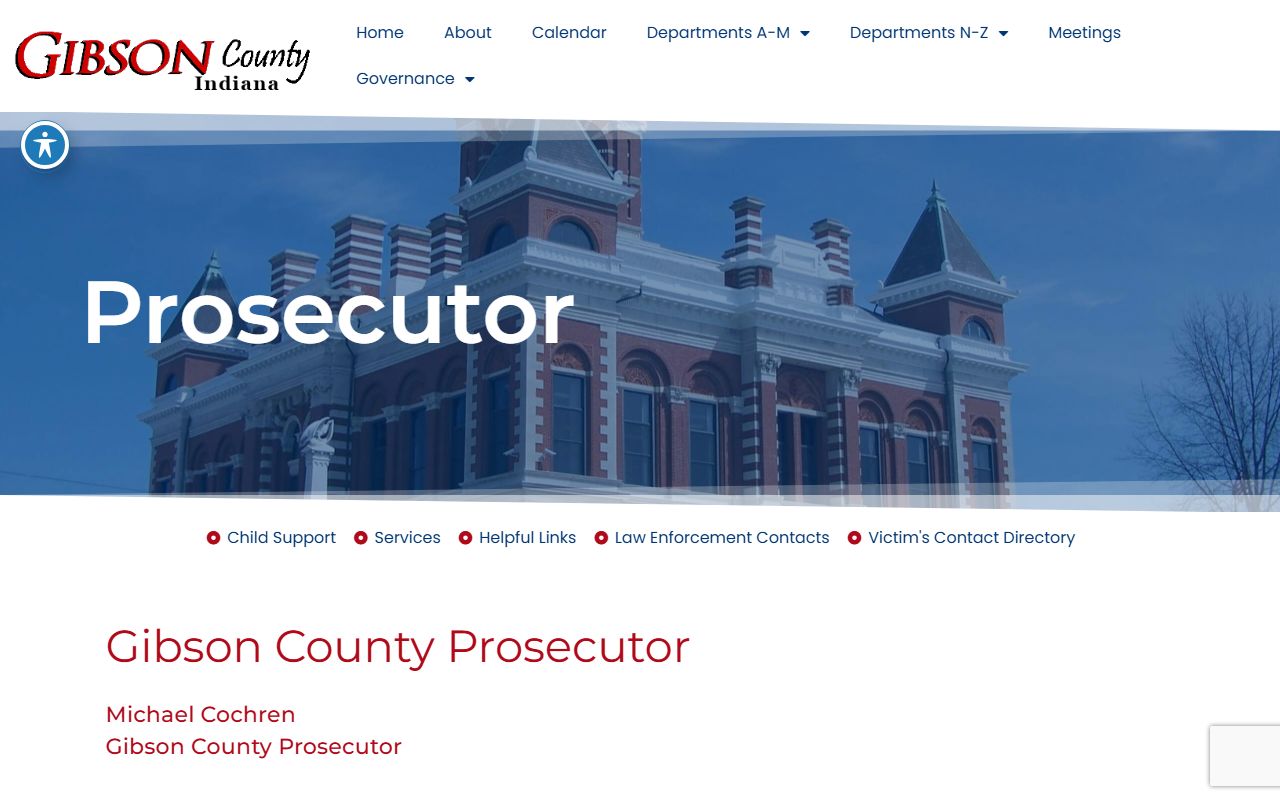
The prosecutor source is relevant because the court file reflects charges and case decisions made by the prosecuting office.
Charges vs Convictions
A charge is not the same as a conviction. A Gibson County criminal record can show a filed count that was later amended, reduced, dismissed, or resolved by plea to a different count. A conviction appears only after the court accepts a guilty plea, finds guilt, or enters judgment after trial. Read each count separately because one case can have mixed outcomes.
| Point | Charge | Conviction |
|---|---|---|
| Meaning | An accusation filed in court. | A final guilty finding or accepted guilty plea. |
| Timing | Early in the case, often before final proof. | After plea, trial, or judgment. |
| Record Use | Shows what the state alleged. | Shows the criminal outcome for that count. |
| Possible Change | May be amended, reduced, or dismissed. | May later be affected by appeal, correction, or expungement. |
Gibson County Criminal Bond Entries
Criminal court records may show bond settings, bond changes, missed court events, and warrant-related entries. The Gibson County Sheriff's Most Wanted page says its wanted list covers warrants issued by Gibson Circuit Court or Gibson Superior Court. The jail bond information says a normal no-warrant bond schedule can be modified only by order of a Superior or Circuit Court judge, while a warrant arrest uses the bond listed on the warrant. That means court, jail, and sheriff records can all matter in one criminal case.
The jail page also says bond can be paid in the jail lobby at any time by using the silver intercom box, with exact cash or credit card subject to surcharges, and that online GovPay bond payments are capped at $2,500. Bond entries in the court record should be checked against current jail or sheriff instructions before any payment or surrender decision.
Gibson County Defense Records
The Gibson County Public Defender's Office is part of the local criminal court ecosystem for indigent defendants. The county public defender page says the office provides access to competent legal representation. Public defender appointment entries, appearances, motions, or orders may appear in the criminal docket when filed. Attorney work product and privileged communications are not public court records simply because a lawyer appears in the case.
The Gibson County Public Defender page is the local source for the public-defense office in criminal court records.
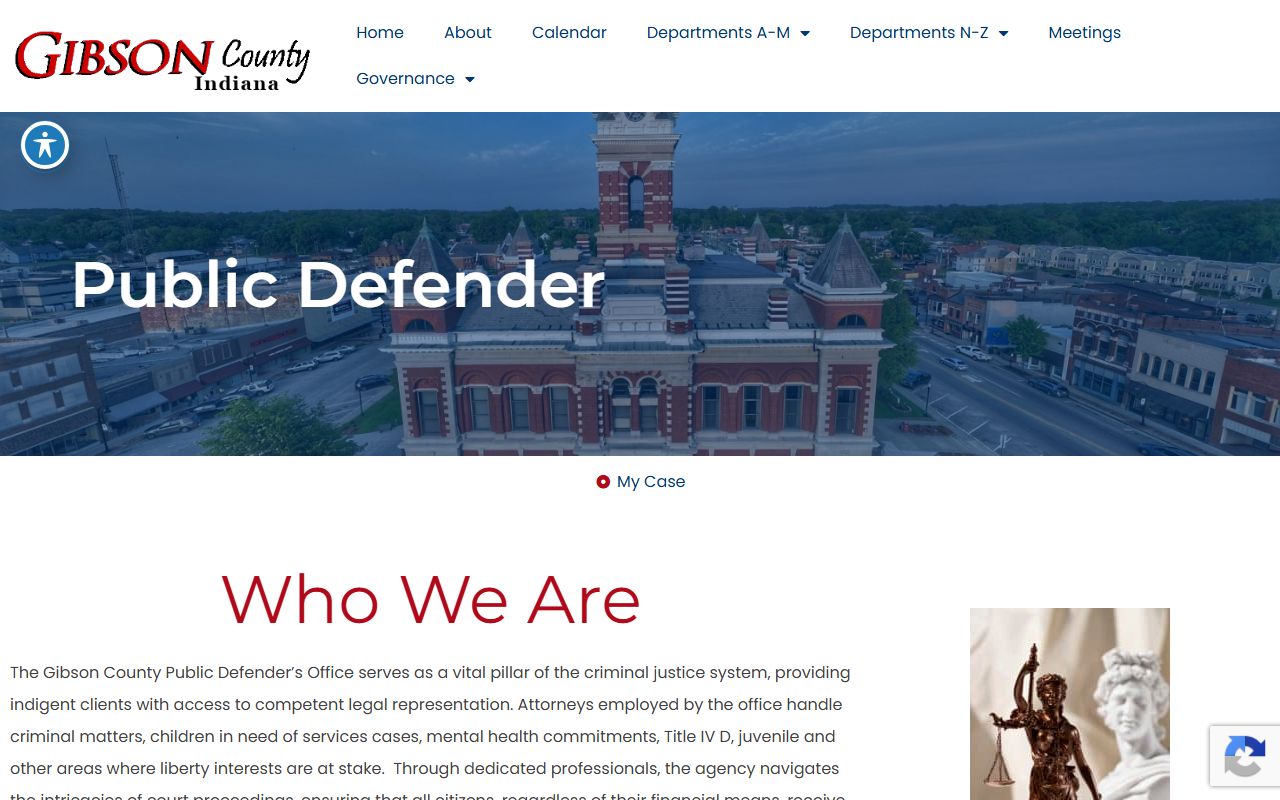
The public defender source supports the local defense side of criminal case records without turning private legal work into public record content.
Gibson County Sealed Criminal Records
Indiana expungement law can affect public access to qualifying arrest and conviction records. Gibson County local-rule research says expungement petitions under IC 35-38-9 are filed in the court where the conviction occurred, or where the case was filed if there was no conviction. If convictions are in both Circuit and Superior Courts, the petition goes to the court with the highest-level case. If an arrest had no charges ever filed, the petition goes to the court that would have handled the most serious unfiled charge.
| Point | Sealed | Expunged |
|---|---|---|
| Public View | Blocked from ordinary public access by order, rule, or law. | Restricted under Indiana expungement law after the court grants relief. |
| Case Still Exists | Yes, but access is limited. | Yes for court and law-enforcement purposes as allowed by law. |
| Where Filed | Usually in the case court. | In the court identified by the local-rule routing and statute. |
| Public Search Effect | Record or documents may disappear from ordinary view. | Public access changes after the expungement order. |
Gibson County Criminal Records Access
Adult Gibson County criminal court records are generally public unless excluded by Indiana court access rules, another statute, or a court order. The Indiana Rules on Access to Court Records control court-record access, and Indiana's public access handbook states the access rules presume records are public unless excluded. Exclusions include juvenile records, protected identifiers, confidential forms, sealed matters, expunged records, victim or address protections, and other restricted documents.
The Indiana Prosecuting Attorneys Council profile is the state source for Gibson County Prosecutor Michael R. Cochren.
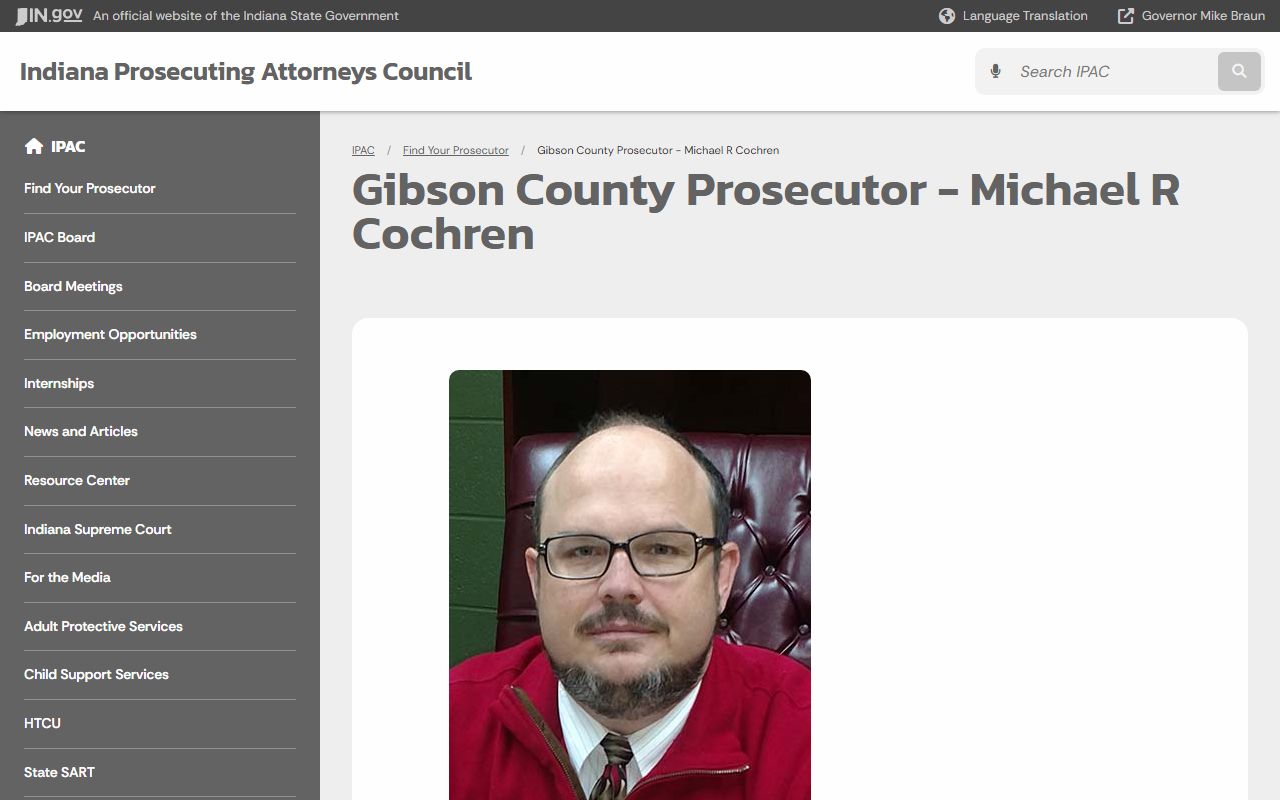
The state prosecutor profile reinforces that criminal filings are tied to Indiana's county prosecutor structure, not a district attorney office.
Note: Criminal court records can show accusations and outcomes, so read the disposition before describing a case result.
Restricted Gibson Criminal Records
Juvenile cases should not be searched or described like ordinary adult criminal cases. Indiana juvenile records have separate access rules under IC 31-39. Mental health material, protected victim information, Social Security numbers, confidential addresses, sealed cases, and expunged records may also be unavailable or redacted. A missing entry or hidden document does not prove the case never existed. It may mean the record is excluded from public access, not scanned, or only available through a proper clerk request.
Background checks have a separate legal framework. A public court search is not the same as an FCRA-regulated consumer report for employment, tenant screening, insurance, credit, or similar regulated use. Verify official criminal court records with the originating court or clerk before relying on them for legal action.